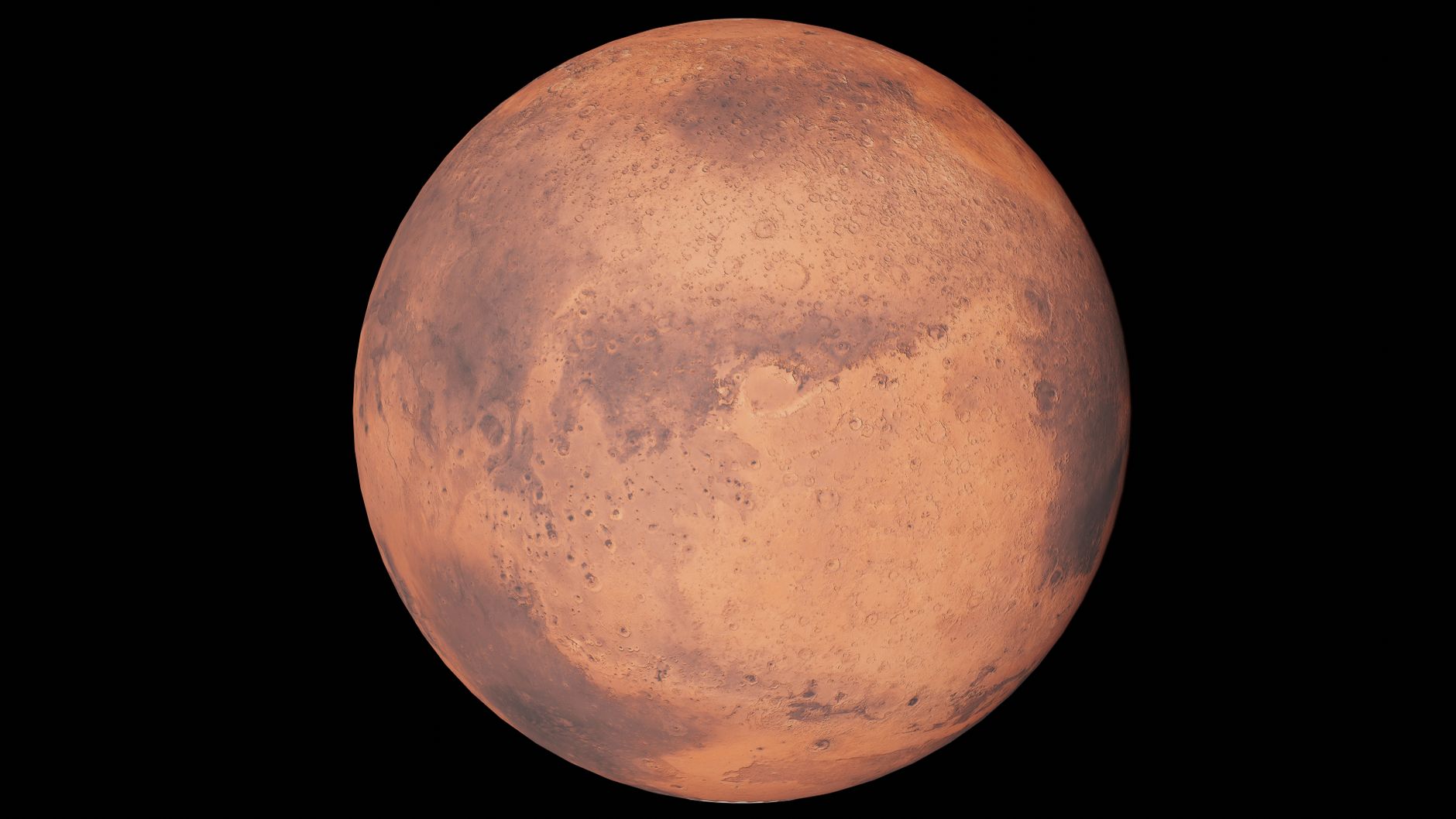
Japan’s space agency JAXA will launch the Martian Moons eXploration (MMX) spacecraft from Tanegashima Space Center in the early hours of Tuesday Japan time (Monday afternoon in the United States). After roughly a year of cruise, the probe will arrive at Mars, orbit the system, and collect at least 10 grams of material from Phobos before returning the cargo to Earth by 2031 – the first ever sample return from a moon other than Earth’s.
Key Takeaways
- MMX launches from Tanegashima in early Tuesday Japan time, targeting Phobos after a ~1‑year cruise.
- The spacecraft will gather ≥10 g of regolith using two independent sampling techniques.
- Samples are slated to arrive on Earth by 2031, marking the first return from a Martian moon.
- MEGANE will map elemental composition via gamma‑ray and neutron spectroscopy to test competing origin theories.
- The mission is a joint effort among JAXA, NASA, ESA, and French and German space agencies.
| Metric | Value | Why it matters |
|---|---|---|
| Mission name | Martian Moons eXploration (MMX) | First attempt to return samples from a Martian moon. |
| Launch site | Tanegashima Space Center, Japan | Leverages JAXA’s proven launch infrastructure. |
| Target body | Phobos (Mars’ larger moon) | Resolving the long‑standing origin debate. |
| Sample mass | ≥10 g | Sufficient for comprehensive laboratory analysis. |
| Return deadline | 2031 | Sets a clear timeline for scientific delivery. |
Mission Overview and Timeline
We are watching MMX’s launch window closely because the spacecraft’s trajectory is timed to intersect Mars after a 12‑month cruise. Upon arrival, the probe will conduct remote observations of both Phobos and Deimos before deploying a small rover to scout a safe landing zone on Phobos. The main lander will then touch down, execute two complementary sampling maneuvers, and lift off with the sealed sample container for the return leg to Earth, targeted for a 2031 splashdown.
Scientific Objectives and Instruments
Our focus is on the MEGANE instrument, a gamma‑ray and neutron spectrometer that will map the elemental composition of Phobos from orbit. By quantifying volatile elements such as hydrogen and potassium, MEGANE can tip the scales between the captured‑asteroid hypothesis and the impact‑debris hypothesis. As David Lawrence of Johns Hopkins University notes:
“We know nothing about Phobos' elemental composition,” says David Lawrence, who leads the MEGANE team from Johns Hopkins University. “For me, that’s what’s exciting—making a measurement nobody’s done before.”
The rover, which will land ahead of the main spacecraft, will provide high‑resolution imaging to refine the landing site and assess surface regolith properties. Two distinct sampling methods—one using a pneumatic drill and another employing a contact‑pad collector—are built in to hedge against failure of either technique.
Historical Context and International Collaboration
We recall that since the 1980s Russia attempted three Phobos probes, all of which failed, leaving the moon’s origin an open question. JAXA’s track record with sample‑return missions—Hayabusa (2010) and Hayabusa2 (2020)—provides a solid foundation, even though Phobos’ low gravity and orbital dynamics differ markedly from the asteroids Itokawa and Ryugu. The MMX team draws expertise from NASA, ESA, and the French and German space agencies, a blend that Elliot Sefton‑Nash of ESA says “really helps make the mission objectives very achievable.”
Technical Challenges and Risk Mitigation
Because the surface of Phobos is poorly characterized, we cannot pre‑select a landing spot without close‑up reconnaissance—a step that the rover will perform. The dual‑sampling architecture is a direct response to this uncertainty; if one mechanism fails, the other can still secure the minimum 10 g payload. Additionally, Phobos’ micro‑gravity (≈0.005 m/s²) demands precise thruster control for both touchdown and ascent, a regime unlike the low‑gravity environments of previous JAXA missions.
Potential Scientific Impact
If Phobos’ regolith contains Martian ejecta, as many models predict, analyzing the returned material could reveal the composition of ancient Martian crust that is otherwise inaccessible. Moreover, the elemental fingerprint of Phobos will inform models of early solar‑system material transport, helping to answer whether the moon is a captured asteroid or the by‑product of a massive impact on early Mars.
Why it matters
We consider MMX a pivotal step for planetary science because it will finally provide ground‑truth data from a Martian moon. The mission’s results could reshape our understanding of Mars’ geological history, refine models of planetary satellite formation, and demonstrate the feasibility of complex sample‑return operations beyond Earth’s immediate neighborhood. The international partnership also sets a precedent for future deep‑space collaborative ventures.
Frequently asked questions
What is the MMX mission?
MMX (Martian Moons eXploration) is a JAXA‑led spacecraft designed to orbit Mars, study its moons, land on Phobos, collect ≥10 g of regolith, and return the samples to Earth by 2031.
When will the samples be brought back to Earth?
The mission targets a 2031 Earth return, giving a total mission duration of roughly a decade from launch to splashdown.
How will MMX determine the origin of Phobos?
By using the MEGANE spectrometer to measure gamma‑ray and neutron emissions, the spacecraft will quantify volatile and refractory elements. A high volatile content would support the captured‑asteroid scenario, while a depletion would favor an impact‑origin model.
Which agencies are involved in the mission?
The project is a collaboration among JAXA, NASA, the European Space Agency, and the French and German space agencies, with contributions from universities such as Johns Hopkins.
How does MMX differ from the Hayabusa missions?
While Hayabusa and Hayabusa2 returned samples from small near‑Earth asteroids, MMX must operate in the low‑gravity, high‑velocity environment of a Martian moon and return material from a body that may contain Martian debris, presenting unique navigation and sampling challenges.
Bottom Line
MMX represents the first realistic attempt to bring back material from a Martian moon, leveraging JAXA’s sample‑return heritage and a broad international team to finally answer the long‑standing question of Phobos’ origin while opening a new window onto Mars’ geological past.
We’ll be watching the 2031 Earth return closely, as it could rewrite textbooks on Martian satellite formation.
Reporting based on: original source.
Comments
Post a Comment