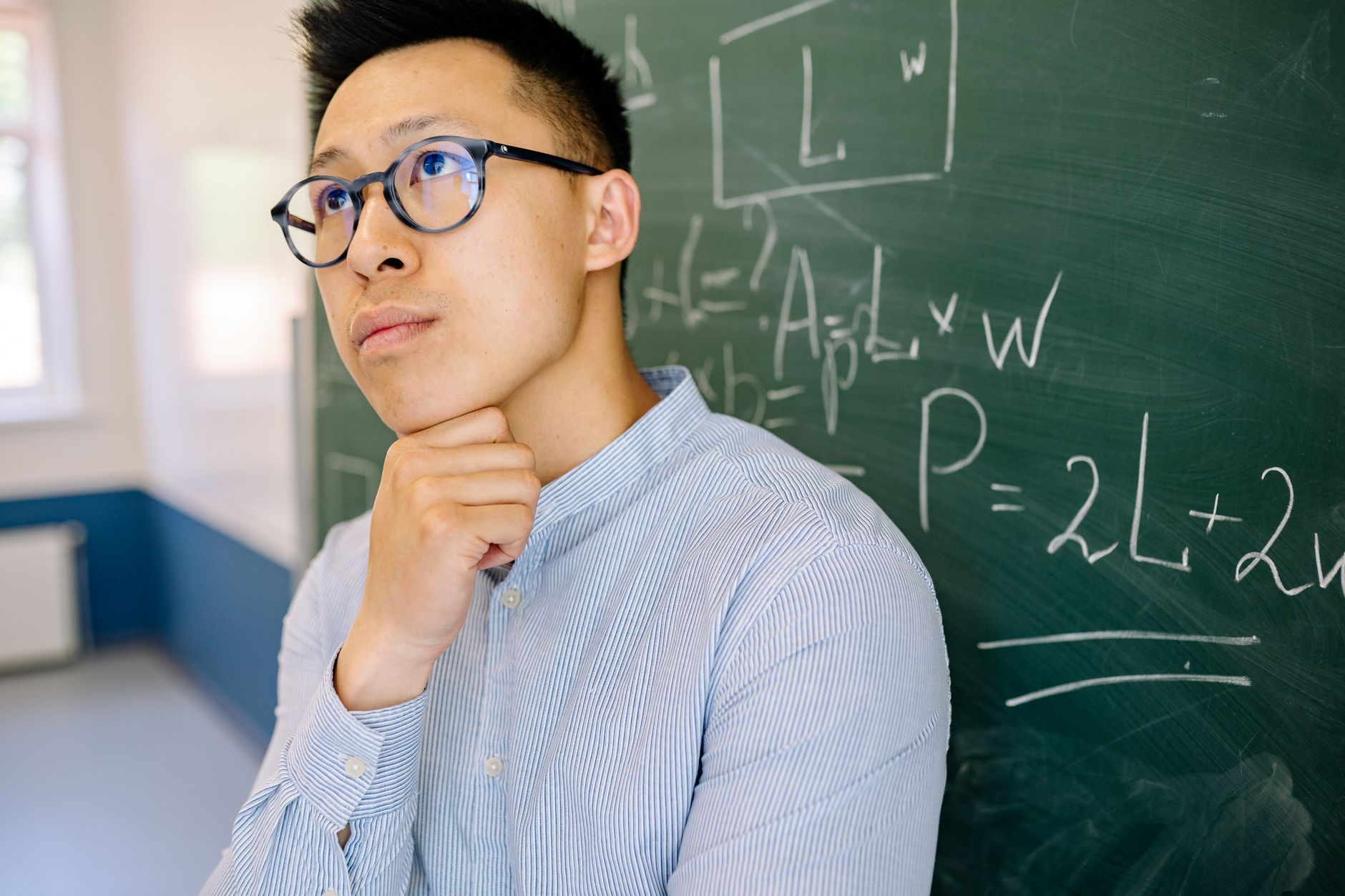
Cornell professor Steven Strogatz broke down in tears while describing OpenAI’s claim that tens of thousands of AI agents solved a 90‑year‑old mathematics problem worth a $1 million prize. The solution, based on a strategy by Spanish mathematicians Diego Córdoba and Luis Martínez‑Zoroa, is still awaiting independent verification and has sparked a dispute with NYU researcher Tristan Buckmaster, who says OpenAI rushed ahead after learning of his work with Anthropic’s Levent Alpöge.
Key Takeaways
- OpenAI used tens of thousands of agents to claim a solution to a century‑old problem with a $1 million prize.
- Anthropic’s Claude proved 29,500 small theorems and helped formalize Fermat’s Last Theorem.
- Mathematicians such as Steven Strogatz and Alex Townsend describe the AI surge as both exhilarating and threatening.
- Credit for the prize is contested; Buckmaster and Alpöge argue they were on the trail first.
- Experts warn that AI may soon eclipse human intuition in pure‑math research, reshaping the field.
| Metric | Value | Why it matters |
|---|---|---|
| Prize amount | $1 million | Sets a high‑stakes incentive for AI‑driven proofs. |
| Agents deployed by OpenAI | Tens of thousands | Illustrates the scale of computational effort behind the claim. |
| Small theorems proved by Claude | 29,500 | Shows rapid theorem‑generation capability of modern LLMs. |
| Years of research cited by Townsend | 15 | Highlights personal stakes for veteran mathematicians. |
What happened: AI claims a century‑old math prize
On Tuesday, OpenAI announced that a swarm of AI agents had produced a solution to a 90‑year‑old problem that carries a $1 million prize. The approach builds on a method originally devised by Diego Córdoba and Luis Martínez‑Zoroa, two Spanish mathematicians whose work underpins the claimed proof. The result has not yet been independently verified, and the mathematics community is waiting for a formal peer‑review.
How the breakthrough was achieved
OpenAI’s system leveraged massive parallelism: tens of thousands of agents explored combinatorial search spaces, generated conjectures, and iteratively refined proofs. In parallel, Anthropic reported that its Claude model proved 29,500 small theorems and contributed to a formalization of Fermat’s Last Theorem—an effort that had occupied mathematicians for decades. Earlier in August, OpenAI said it had made progress on ten other longstanding problems, indicating a broader push to embed theorem‑proving into large language models.
Who’s contesting the credit
Tristan Buckmaster of New York University, who collaborated with Anthropic researcher Levent Alpöge, claims OpenAI learned of his work shortly before announcing the prize‑winning solution. Buckmaster alleges that OpenAI attempted to shape the narrative around who receives credit. While Strogatz expressed admiration for Córdoba and Martínez‑Zoroa, he also noted that Buckmaster and Alpöge “were on the trail, and I think they would've gotten there, but we don't know.”
Mathematicians’ reactions: awe and anxiety
Strogatz, co‑author of the upcoming book Big Math, described 2026 as “either an annus mirabilis or annus horribilis for mathematics because so much has happened.” He likened the current climate to a horror film, saying,
“Instinctively, I'm really terrified.”Alex Townsend, who used ChatGPT to crack a decades‑old numerical linear‑algebra problem, echoed the sentiment: “I actually feel kind of upset that I've dedicated 15 years of my life to research mathematics… now I don't feel like I'm the one at the frontier of knowledge.”
Implications for the future of mathematics
Strogatz warned that pure‑math breakthroughs may soon require AI assistance, noting that “you will not be able to compete without AI in the future if you want to do breakthrough math.” He added that human expertise will remain essential for “proof digestion”—translating machine‑generated arguments into language that mathematicians can verify and appreciate. However, he predicts that even this role could be eclipsed as AI models improve. Applied mathematics, which deals with messy real‑world data, may resist automation longer than abstract fields such as number theory.
Why it matters
The race to embed theorem‑proving in AI reshapes how mathematical research is funded, credited, and conducted. A $1 million prize tied to AI output signals that corporations view breakthroughs as branding opportunities rather than purely scholarly achievements. For academics, the shift raises questions about authorship, career relevance, and the ethical stewardship of powerful, opaque systems. Observers will watch whether verification bodies adapt quickly enough to certify AI‑generated proofs, a step that could determine the legitimacy of future prizes.
Frequently asked questions
What was the 90‑year‑old problem that OpenAI claimed to solve?
It is a long‑standing mathematical challenge that carries a $1 million prize; the exact statement has not been disclosed in the source material.
Who originally developed the strategy used in the claimed solution?
Spanish mathematicians Diego Córdoba and Luis Martínez‑Zoroa created the underlying approach.
Why does Tristan Buckmaster dispute OpenAI’s claim?
Buckmaster says OpenAI learned of his collaborative work with Anthropic’s Levent Alpöge shortly before announcing the solution and attempted to influence credit allocation.
What role does AI currently play in formalizing existing proofs?
Anthropic’s Claude model helped formalize Fermat’s Last Theorem and proved 29,500 smaller theorems, demonstrating that LLMs can assist in both discovery and verification.
Will human mathematicians become obsolete?
Strogatz believes humans will still be needed for translating and interpreting machine‑generated proofs, though he anticipates that even this niche may shrink as AI capabilities grow.
Bottom Line
OpenAI’s claim of solving a century‑old, $1 million‑prized problem with tens of thousands of agents marks a watershed moment for AI‑driven mathematics, but the lack of independent verification and disputes over credit highlight the growing tension between human expertise and machine power. As AI accelerates theorem‑proving, mathematicians must grapple with both unprecedented opportunities and existential anxieties about their future role.
The unfolding debate will likely shape research funding, academic credit, and the very definition of mathematical discovery in the years ahead.
Reporting based on: original source.
Comments
Post a Comment