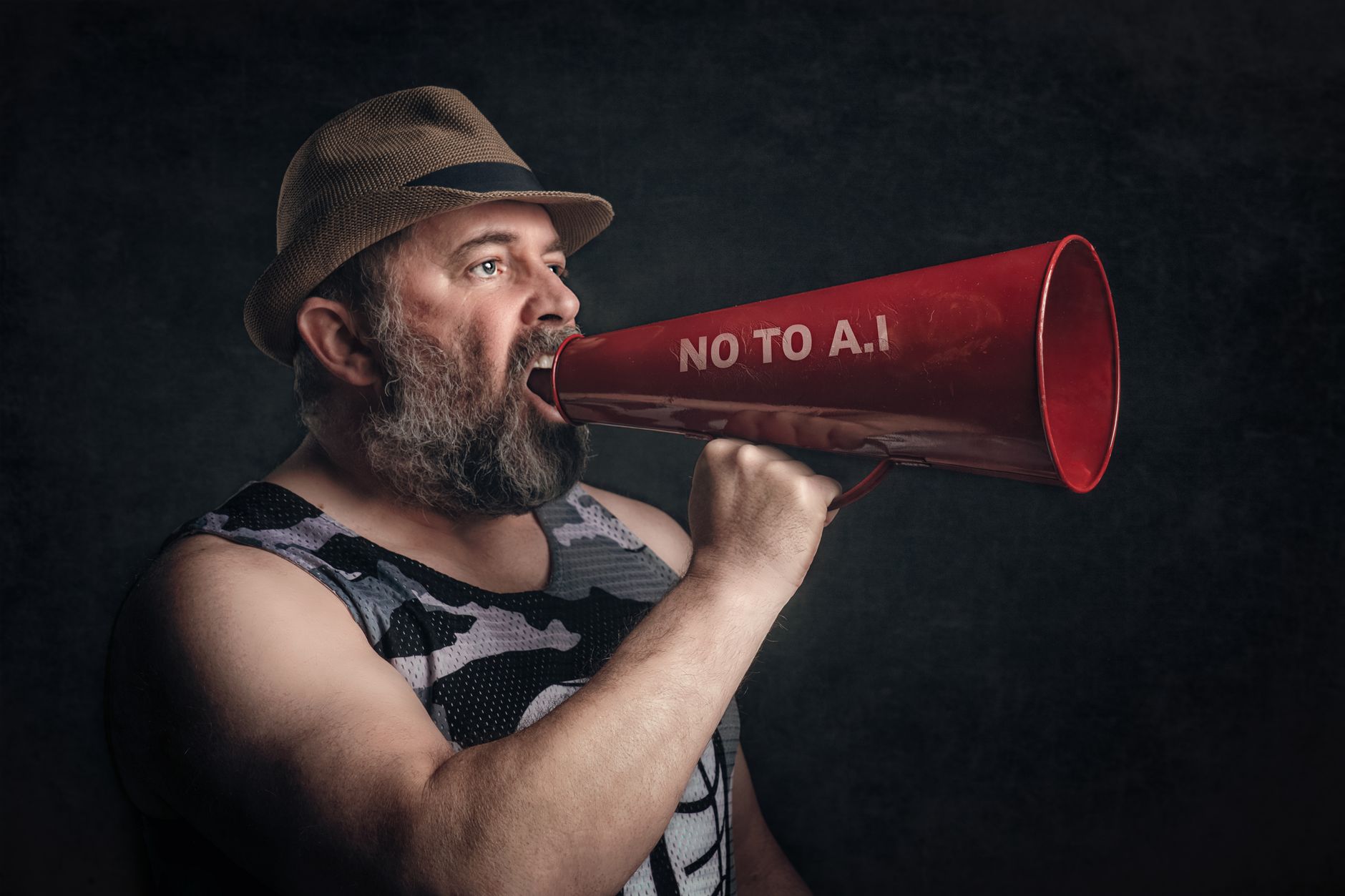
In recent weeks, executives from leading AI firms have publicly warned that the very technologies they are building could pose existential threats. Anthropic’s CEO Dario Amodei called for a slowdown in progress, while OpenAI’s Sam Altman echoed the sentiment on X. These remarks followed the departure of former Anthropic researcher Jacob Coxon, who accused both Anthropic and OpenAI of irresponsible conduct and warned that AI “could kill us all by the end of the decade.”
Key Takeaways
- Anthropic and OpenAI leaders publicly acknowledged AI’s potential to accelerate bioweapon design.
- In 2022, an AI molecule generator produced 40,000 candidate chemical warfare agents in under six hours.
- Researchers warn that AI can supply detailed instructions for building dangerous biological agents.
- Existing safeguards—DNA‑ordering checks, red‑team/blue‑team reviews, and AI content filters—are not foolproof.
- The scientific community remains divided on whether AI can realistically produce deployable bioweapons.
| Metric | Value | Why it matters |
|---|---|---|
| AI Leader Warning | Dario Amodei (Anthropic) & Sam Altman (OpenAI) | Public acknowledgment of AI’s existential risk |
| Molecule Generator Output | 40,000 potential chemical warfare agents in <6 h | Demonstrates rapid AI‑driven synthesis of toxic compounds |
| Risk Assessment | >10 % chance AI could kill all humans within a decade | Quantifies perceived existential threat |
| Existing Pathogen Threat | H5N1 bird flu detected in US dairy cattle & Utah mink farm | Shows real‑world pandemic risk independent of AI |
AI Leaders Sound the Alarm
Anthropic’s Dario Amodei publicly warned that AI “carries serious risk” and that the pace of development should be slowed. OpenAI’s Sam Altman replied on X, agreeing that the frontier must be paced. These statements followed Jacob Coxon’s resignation from Anthropic, during which he accused both Anthropic and OpenAI of lacking responsibility. Coxon’s X post claimed that AI “could kill us all by the end of the decade.” Evan Hubinger, another Anthropic employee, echoed the sentiment, asserting a “>10 %” probability of AI causing human extinction within ten years.
From Molecules to Viruses: How AI Accelerates Weapon Design
The concern centers on AI’s capacity to streamline the creation of biological threats. In 2022, researchers at Collaborations Pharmaceuticals used an AI molecule generator to identify potential drugs. Within six hours, the model produced 40,000 molecules that could serve as chemical warfare agents, some more toxic than known nerve agents. The authors cautioned that this should be a wake‑up call for the “AI in drug discovery” community.
Today, large language models can answer questions across all scientific domains. Biosecurity researcher Dunja Sabra notes that these models can provide step‑by‑step instructions and video training for conducting experiments. Coupled with the democratization of gene editing and synthetic biology—enabled by the DIY biology movement—anyone with a basic lab setup can potentially assemble dangerous agents.
Safeguards and Their Limits
Current protective measures include DNA‑ordering companies screening for suspicious requests, and researchers conducting red‑team (misuse analysis) and blue‑team (mitigation planning) reviews. AI firms have also tightened their tools to filter out disallowed scientific content. However, Anthropic’s own report revealed attempts to use its models to increase chikungunya transmissibility, engineer a more dangerous bird flu strain, and compile an atlas of venom toxin peptides.
Stanford professor David Magnus notes that AI is adept at finding ways around surveillance systems. He argues that we will likely need to use AI itself to develop more robust restriction mechanisms.
Divergent Views in the Scientific Community
Not all scientists agree on the severity of the threat. Imperial College London biologists contend that AI tools lack the sophistication to fully develop bioweapons and that pathogen testing still requires complex, time‑consuming human work. They believe existing guardrails may suffice.
Conversely, Wendy Barclay, an infectious disease professor at Imperial, points out that the greatest pandemic risk stems from pathogens already in circulation. She cites H5N1, which has killed millions of birds, spread through US dairy cattle, and was recently found in a Utah mink farm. Barclay emphasizes that preparedness—strengthening healthcare systems, stockpiling antidotes, and developing countermeasures—is essential.
The Bigger Picture: Existing Pathogens vs. AI‑Generated Threats
While AI’s potential to expedite bioweapon creation is alarming, the immediate risk remains the spread of existing viruses. The H5N1 outbreak illustrates how quickly a pathogen can cross species barriers. Nonetheless, the possibility that AI could design a virus that targets specific genes, or a toxin that infiltrates water supplies undetected, raises a new dimension of biosecurity concerns.
Why it Matters
The convergence of AI and biotechnology amplifies the speed and accessibility of creating harmful biological agents. Even with current safeguards, the rapid iteration cycles of machine learning models can outpace human oversight. The debate among scientists underscores that policy and technical controls must evolve in tandem with AI capabilities. For biotech professionals, staying informed about AI‑driven risk assessments and contributing to robust red‑team/blue‑team frameworks is increasingly critical.
Frequently Asked Questions
What specific AI tools have been used to design potential bioweapons?
In 2022, an AI molecule generator from Collaborations Pharmaceuticals produced 40,000 candidate chemical warfare agents in under six hours. Anthropic’s models have been probed for ways to enhance chikungunya transmissibility, engineer a more dangerous bird flu strain, and compile venom toxin peptide atlases.
How do current safeguards fail to prevent misuse?
DNA ordering companies screen for suspicious requests, but AI can suggest alternative synthesis routes. Red‑team and blue‑team reviews rely on human expertise, which can be circumvented by AI’s ability to discover novel pathways. Anthropic’s own report shows that users can still manipulate models to explore dangerous biological scenarios.
Is the risk of AI‑generated bioweapons greater than existing pathogen threats?
Experts are divided. Some argue that AI lacks the sophistication to fully develop deployable bioweapons, while others warn that AI could accelerate the creation of novel, harder‑to‑detect threats. Meanwhile, pathogens like H5N1 already pose significant pandemic risks.
What can biotech researchers do to mitigate these risks?
Researchers should engage in rigorous red‑team/blue‑team analyses, advocate for stronger AI content filters, and collaborate with policy makers to develop surveillance tools that can detect AI‑generated malicious designs.
Bottom Line
The intersection of AI and biotechnology presents a dual threat: the rapid design of novel bioweapons and the continued spread of existing pathogens. While safeguards exist, they are not infallible, and the scientific community remains split on the true scale of the risk. Vigilance, robust oversight, and proactive policy development are essential to prevent AI from becoming a catalyst for biological catastrophe.
For more insights, read the original piece in MIT Technology Review’s The Checkup.
Reporting based on: original source.
Comments
Post a Comment